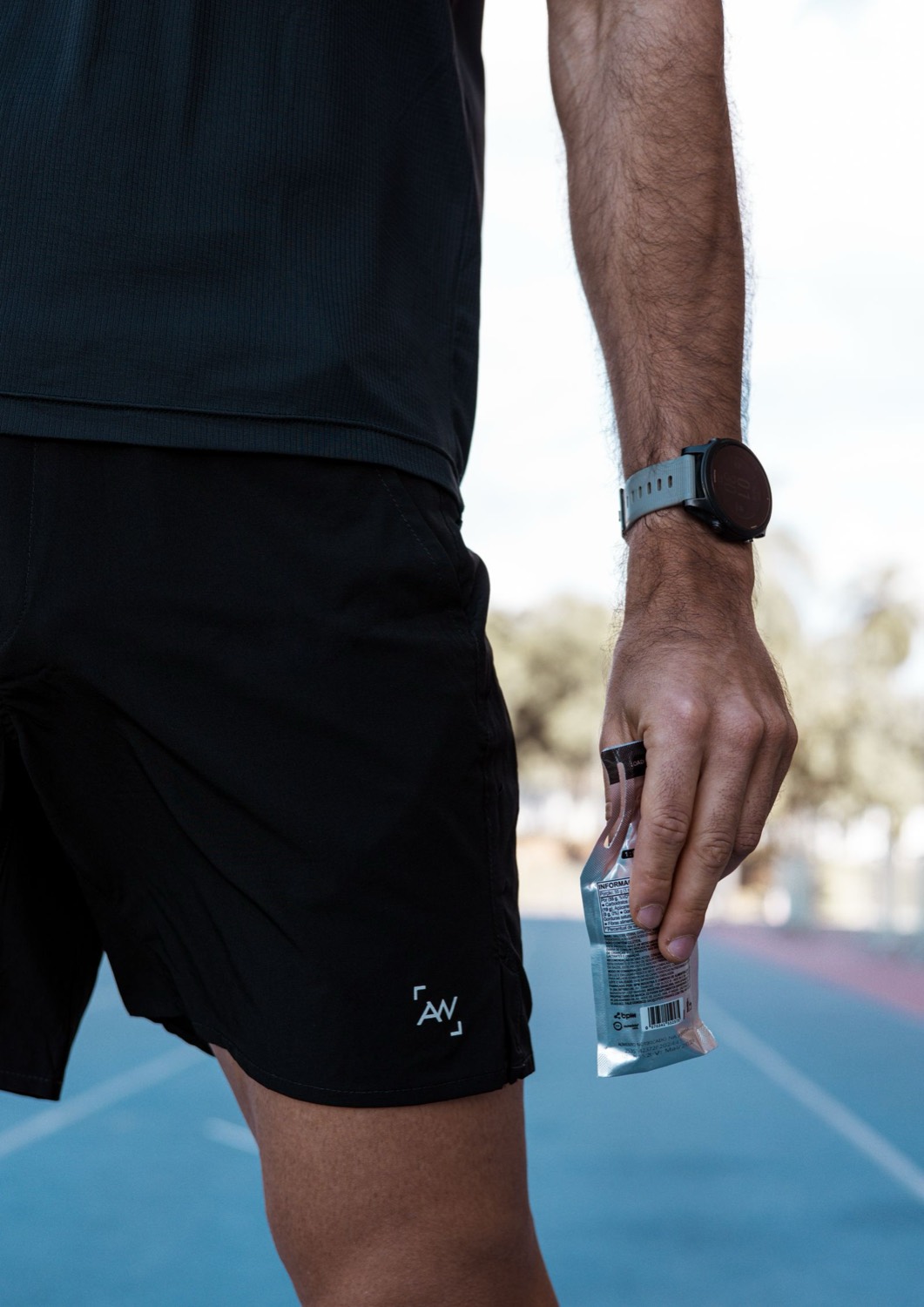
I have watched fit, well trained athletes fall apart in the back half of a long race and walk away convinced they need to train harder. Usually they do not. They need to eat more, earlier, and in the right form.
Here is the part that surprises people: your gut has a hard ceiling on how fast it can absorb a single type of carbohydrate.
Why one fuel runs out
Glucose is absorbed through a transporter in your gut called SGLT1, and that transporter saturates. Once it is full, eating more glucose does not get more energy into your bloodstream, it just sits in your stomach and makes you feel sick. Research from Asker Jeukendrup and colleagues showed that the oxidation rate of a single carbohydrate does not exceed about 60 grams per hour, no matter how much more you take (Jeukendrup, 2008).
The clever fix is to use two fuels at once. Fructose is absorbed through a different transporter, so if you combine glucose and fructose, you open a second lane. Taken together, these "multiple transportable carbohydrates" push absorption and oxidation up to roughly 90 grams per hour and beyond (Jeukendrup, 2014).
One fuel taps out near 60 grams an hour. Two fuels get you to 90.
The practical rule
For efforts under about two hours, aiming for 30 to 60 grams of carbohydrate per hour from any source is usually enough. For longer events, the guidance from the research is clear: athletes should consider increasing intake toward 90 grams per hour, using a mix of glucose and fructose (or maltodextrin and fructose), roughly in a 2 to 1 ratio (Jeukendrup, 2014). Most modern gels and drink mixes already use this blend, so check the label.
Three things matter as much as the number:
Start early. Begin fueling inside the first 30 minutes, before you feel like you need it. By the time you feel empty, you are already too far behind to catch up.
Set an alarm. A repeating beep on your watch beats relying on memory when you are tired and racing.
Train your gut. Taking in 90 grams an hour is a skill your stomach has to practice. Rehearse it on long training days, not on race morning.
If fueling is the thing quietly capping your races, the 2 minute assessment will flag it, along with the first change to make.